A walk through a Roi Et neighbourhood, shot on an old Fujifilm FinePix F50fd – a 12-megapixel compact digital camera released in 2007. The digicam’s colors and lower resolution give these everyday scenes a slightly nostalgic feel.
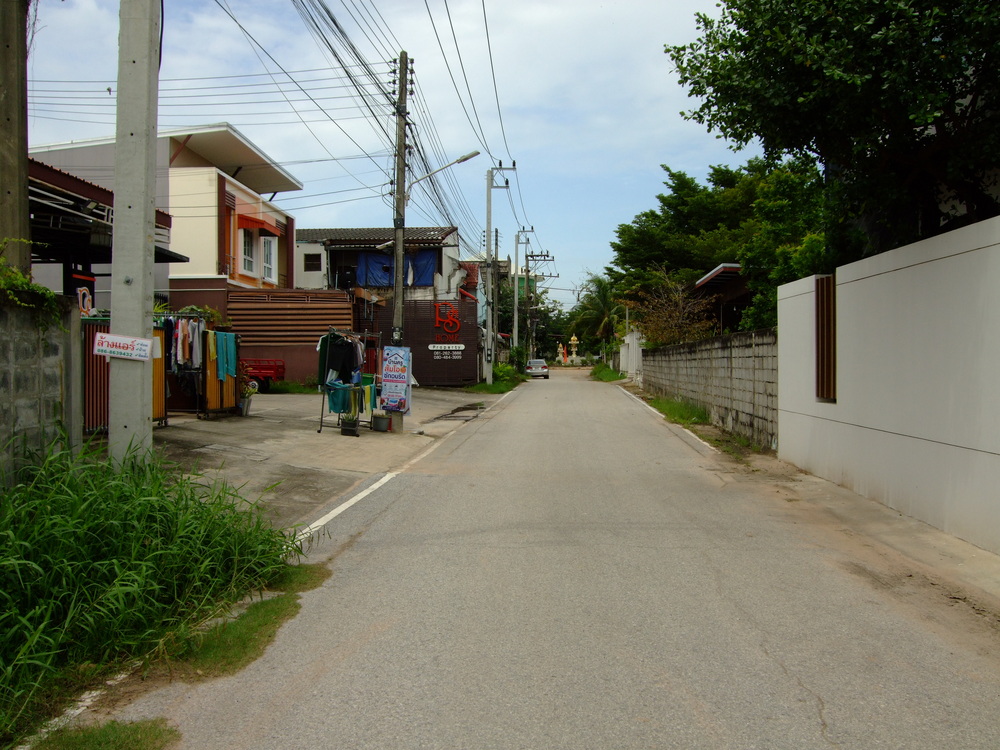
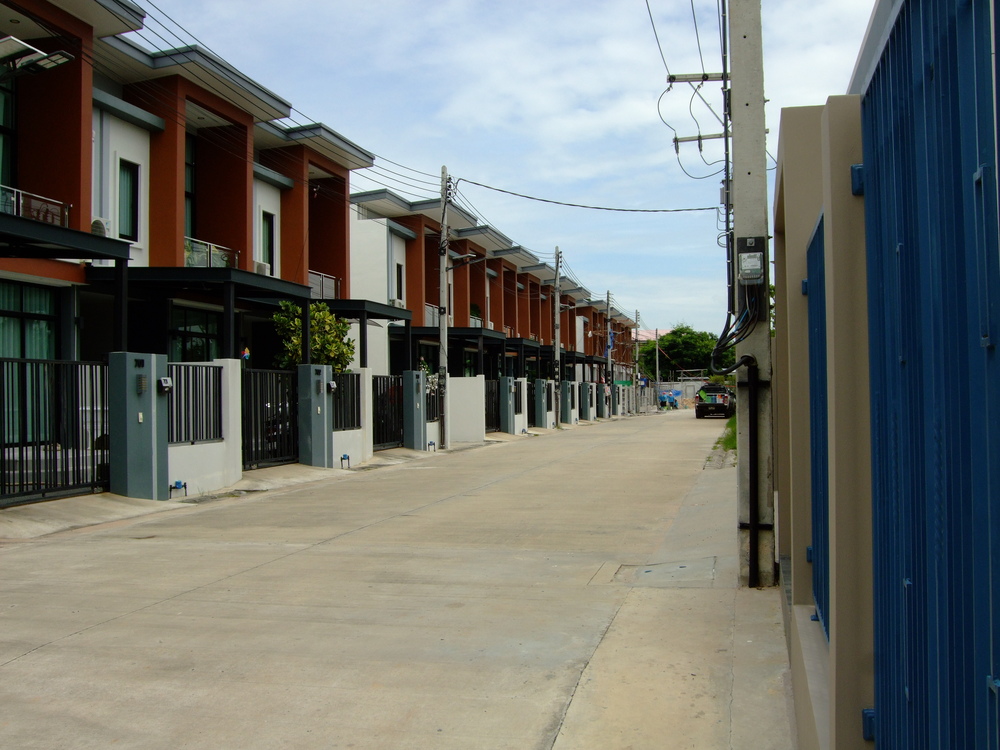
A typical moo baan: a planned housing estate, built by a single developer with matching house designs, then sold off individually. Some are gated, many aren’t.
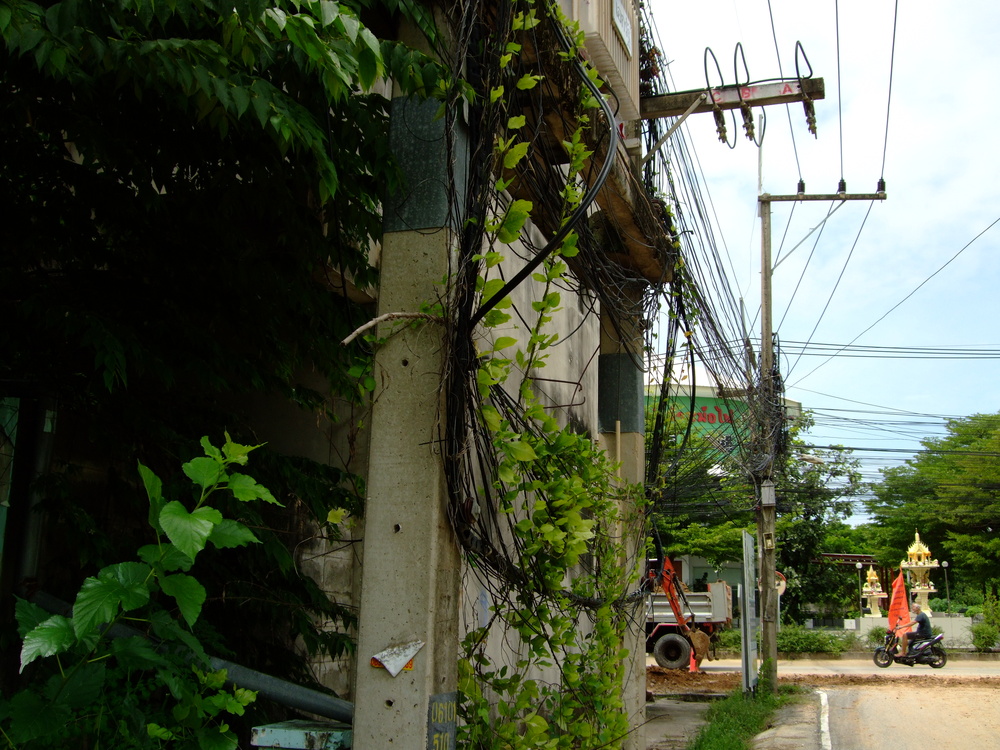
Look up on almost any street in Thailand and you’ll see it – a tangled mess of cables running pole to pole, sometimes so dense they form a black canopy overhead. Electricity lines, telephone wires, and cable TV or internet lines, often added by different providers over different years with little coordination.
Older, thicker cables tend to carry power. The thinner, looser bundles are usually fiber or copper internet and phone lines, frequently added on top by new providers rather than removed when old ones go dead.
The result looks chaotic, but it’s a familiar sight across Isaan towns – a visual signature of how infrastructure here grows organically, one added cable at a time, rather than getting redesigned from scratch.
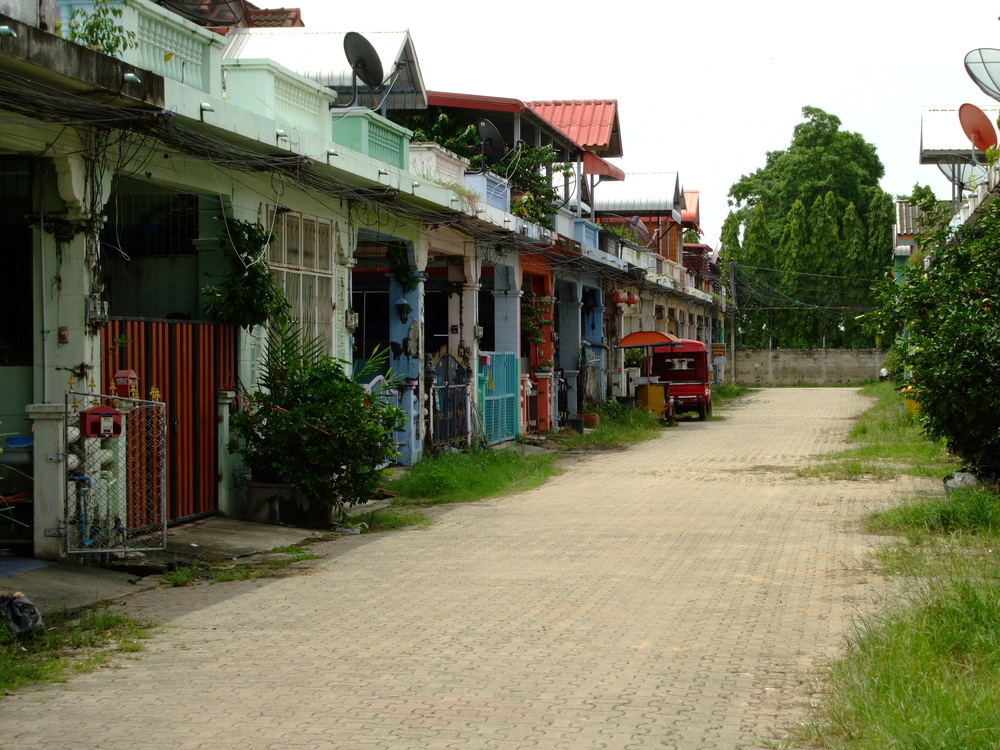
Tuek taew – attached row houses/shophouses, common along older sois and roads. Each unit often individually owned/modified over time, which is why you see varied colors, different satellite dish setups, and personalized gates.
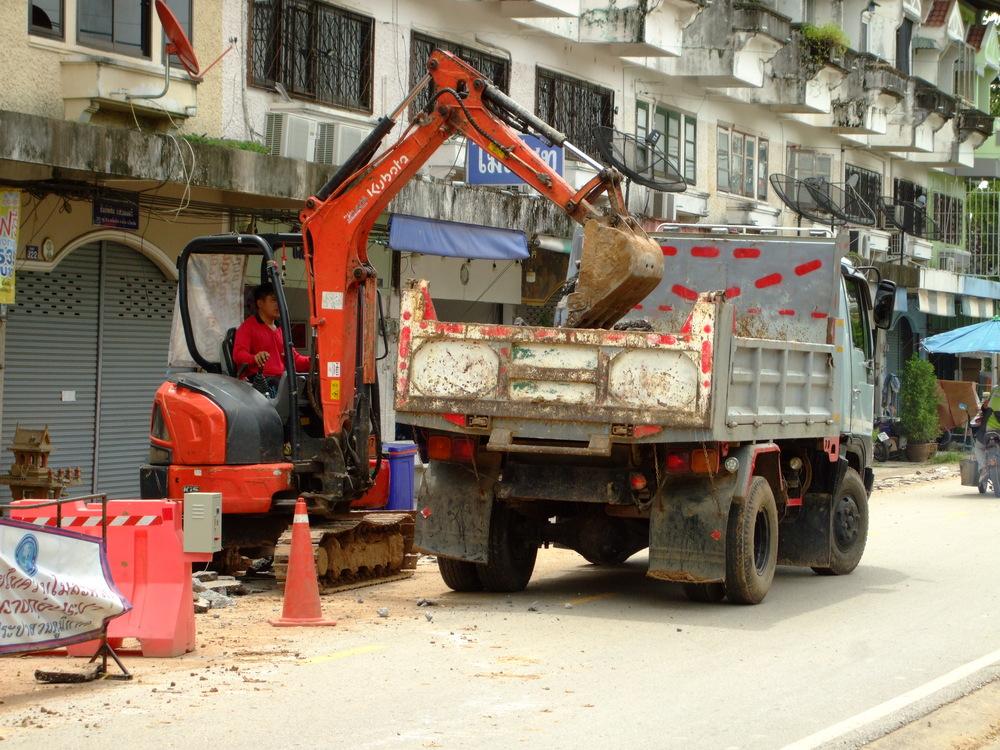
Small excavators show up everywhere in Isaan. Locals call them “rot back-ho,” borrowed straight from the English “backhoe”, even if they are technically tracked excavators!
You’ll spot them digging drainage ditches, clearing land, laying pipes. Most aren’t run by big companies. A local operator often owns the machine and hires it out by the day.
Many are older Japanese imports – Komatsu, Kubota, Hitachi – part of a massive secondhand trade flowing from Japan into Southeast Asia.
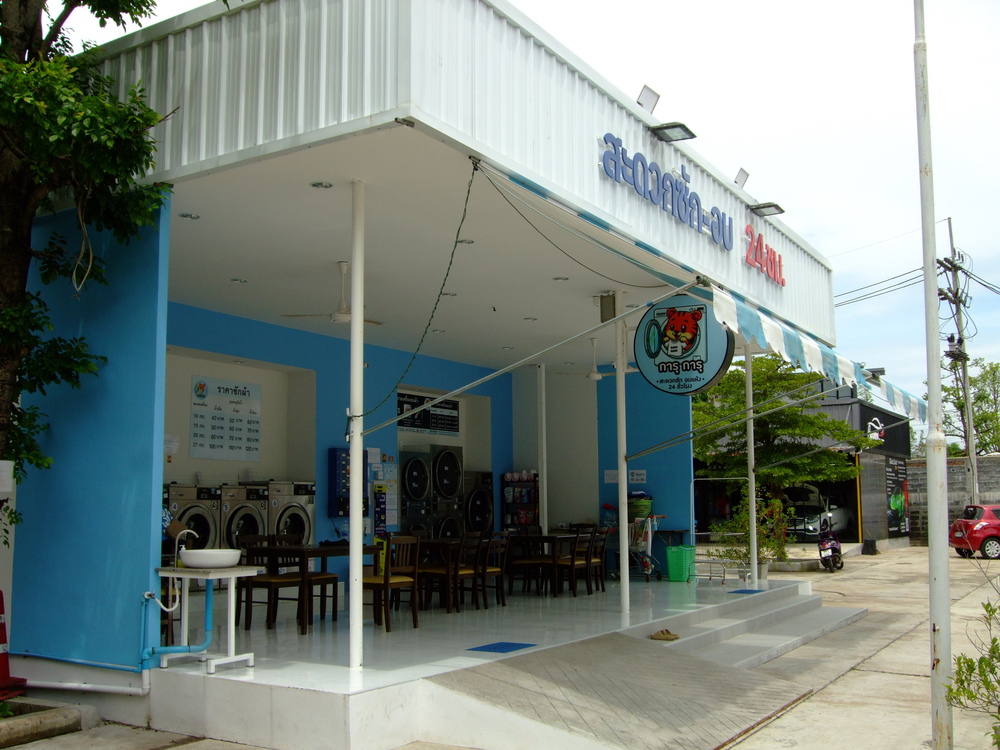
Laundromat – a self-service laundry with coin-operated (or card-operated) washing machines.
In Thailand, you’ll see these everywhere, especially near housing estates and student areas – usually just called a “coin laundry” (a term Thais use in English too) or in Thai: ran sak pha yod rian — “coin-drop laundry shop”.
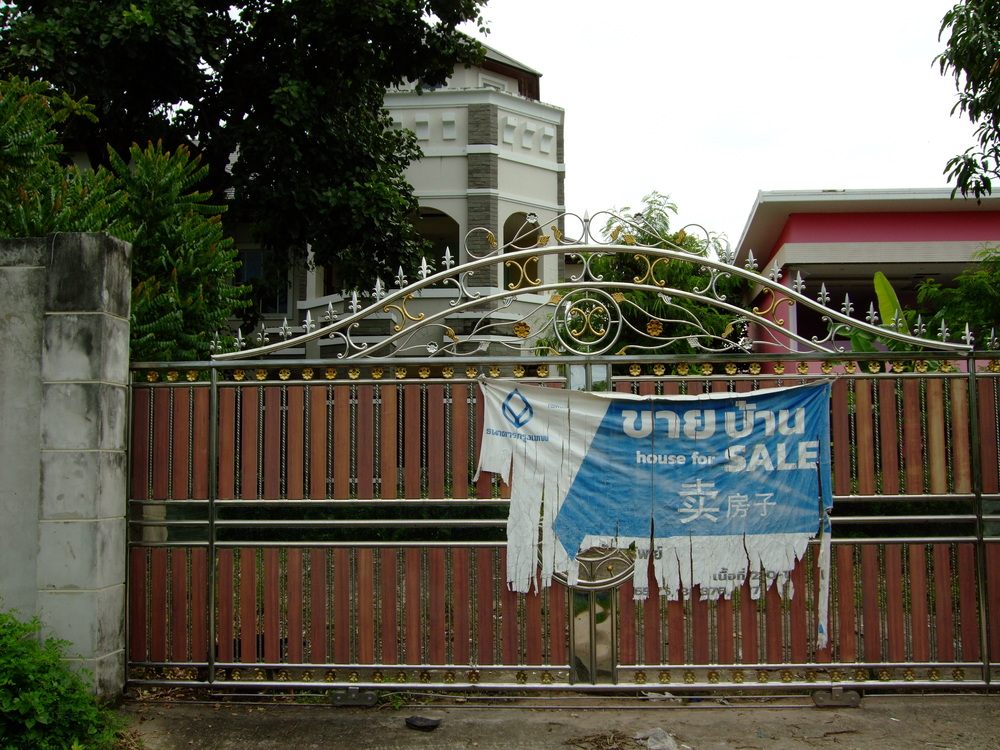
Drive through almost any Thai town and you’ll spot them – houses with a “For Sale” sign out front, sometimes faded from months or years in the sun. Unlike in many Western markets, homes in Thailand can sit unsold for a long time, and there are a few reasons why.
Pricing is often unrealistic. Sellers frequently ask for what they believe the house is “worth” emotionally or based on rising land prices nearby, rather than what buyers are actually willing to pay.
Financing is another hurdle: many Thai buyers can’t easily get a mortgage, especially for older or rural properties, which shrinks the pool of realistic buyers to cash buyers only.
Inheritance also plays a role. A house is sometimes left to multiple family members who disagree on price or simply aren’t in a rush to sell, so it just sits.
And in smaller towns and villages, demand itself is limited: there are only so many people looking to buy in that specific soi or neighbourhood at any given time. The result is a familiar sight across Isaan. Quiet houses, faded signs, and no urgency to move them.

Dogs are a constant presence on Thai streets – some are strays, some are “soi dogs” loosely cared for by a neighbourhood without belonging to any one household, and some are pets that simply roam freely behind an open gate.
Thailand has one of the largest stray dog populations in the world, estimated at several million, many descended from generations of street-born dogs rather than abandoned pets.
Buddhist beliefs around not harming animals mean strays are rarely removed by force, and it’s common to see food and water left out for them by locals or temples.
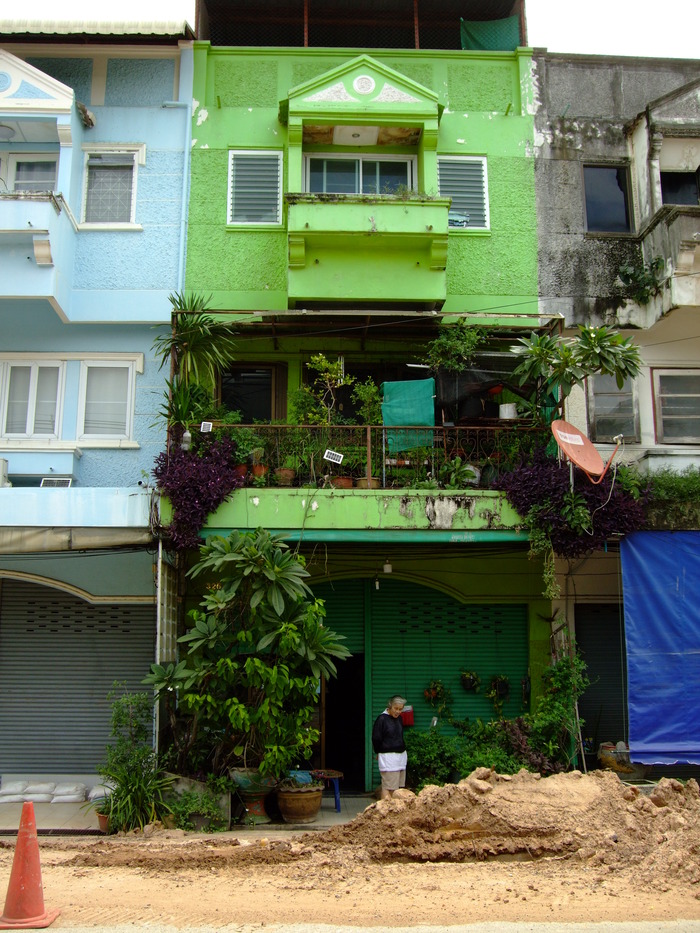
A shophouse (tuek taew) is one of the most common building types in Thai towns – a narrow, multi-story building with a shop or business on the ground floor and living space above. They’re built attached in long rows, sharing walls with the units on either side, which makes efficient use of limited street frontage.
In smaller towns like Roi Et, shophouses often show decades of individual modification: mismatched paint, added satellite dishes, personalized gates, a patchwork look that comes from each owner adapting their unit over the years.
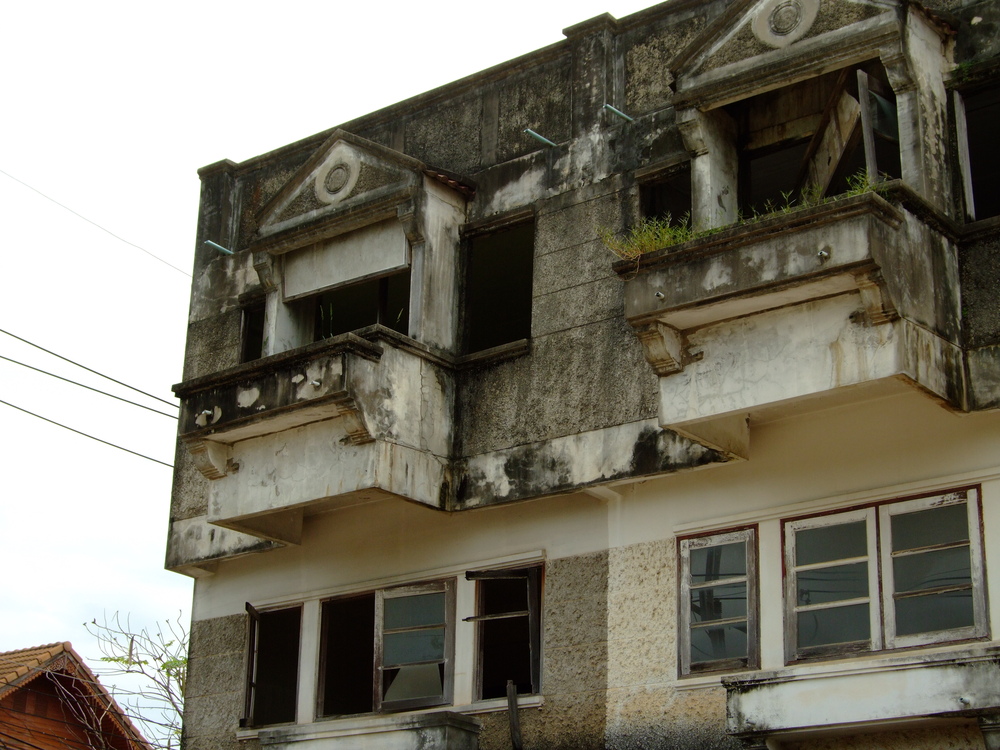
This shophouse has been empty a while now. No sign of business, no sign anyone’s coming back. Just one of those quiet gaps you walk past in town.
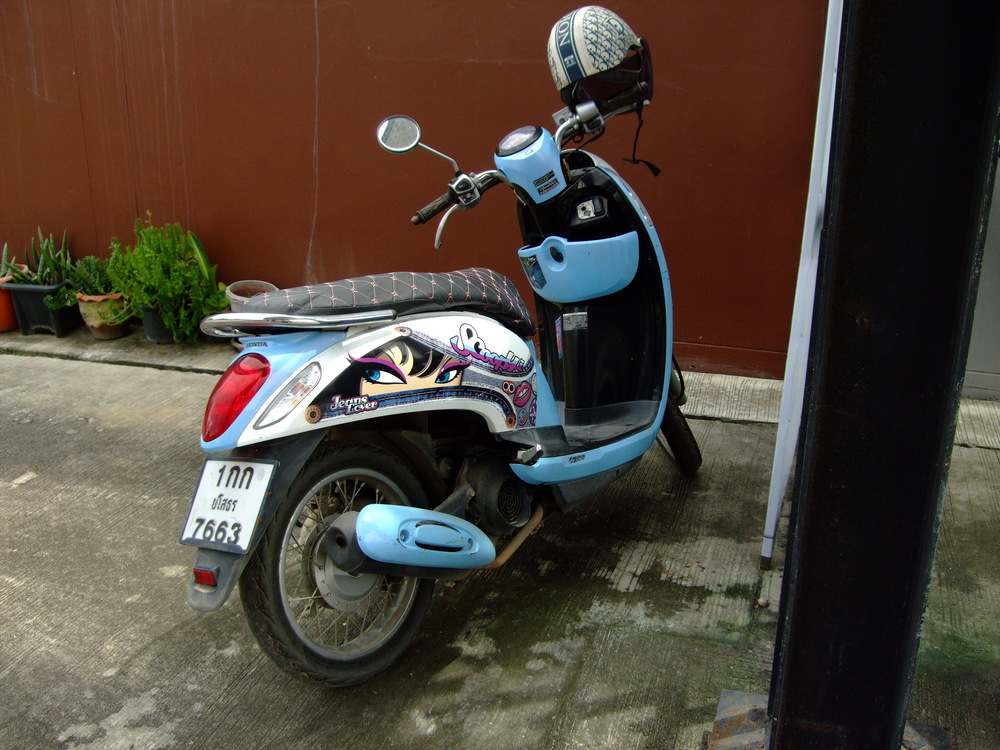
“Motorcycle”: Pronounced moh-dter-sai. This is the most common word used by locals for any two-wheeled motorized vehicle, whether it is a small 110cc automatic bike or a massive sports bike.
“Mo-sai”: The shortened, slang version used heavily in everyday conversation.
“Rot chak-kra-yan-yon”: The official, formal Thai word for a motorcycle (literally meaning “motorized bicycle”) used on government signage, driving tests, and legal documents.
Scooters are everywhere in Thailand – more common than cars in most towns, and for good reason. They’re cheap to buy, cheap to run, and easy to park down narrow sois where a car wouldn’t fit. It’s normal to see a scooter doing the work of a family car: a parent driving, a kid wedged in front, groceries hanging off the handlebars, sometimes a whole family of four balanced on one bike.